
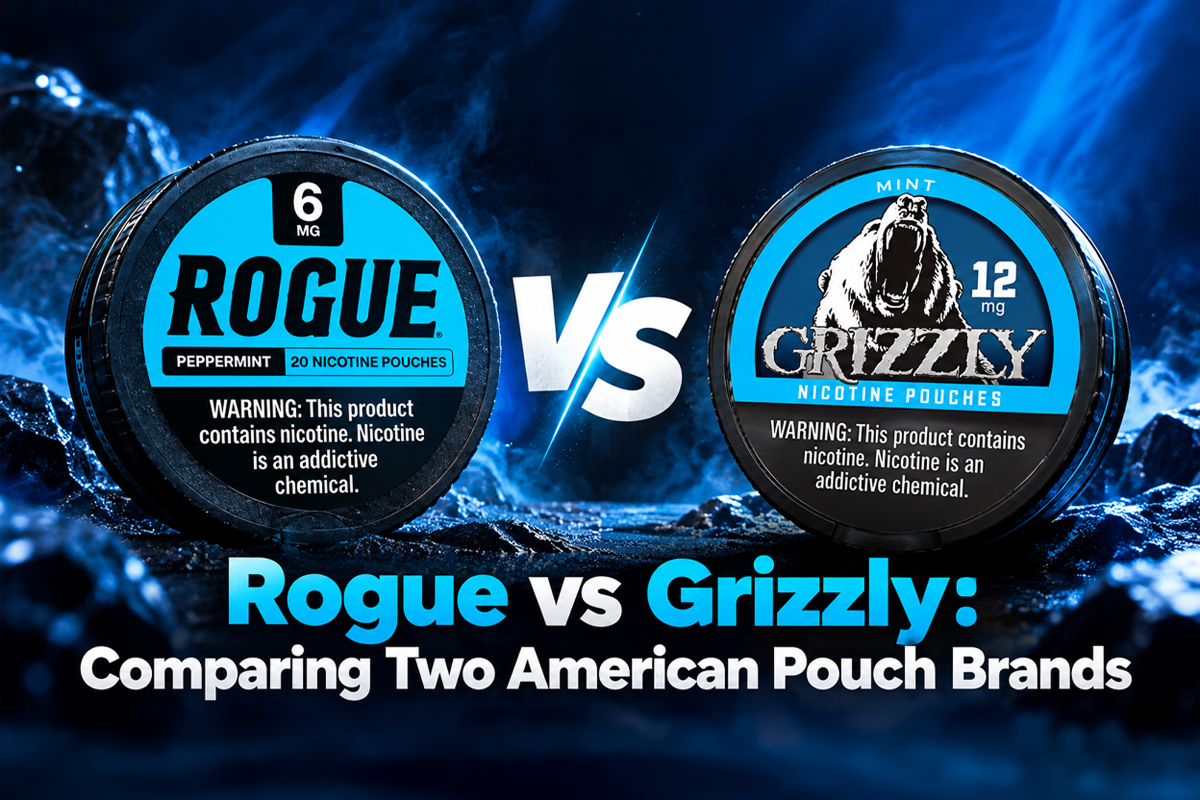
Two brands, two very different backstories, one shared goal: getting nicotine to you without smoke, spit, or tobacco leaf. Rogue and Grizzly have both carved out a following in the US pouch market, but they got there from opposite directions. One built a name from scratch around the pouch format itself. The other spent decades as a dip and chew staple before making the leap to tobacco-free. Here's how the two stack up.
Old Name, New Format: Grizzly's Journey to Tobacco-Free
Grizzly earned its reputation long before nicotine pouches existed, as a familiar name in traditional dip and chewing tobacco. Its pouch line carries that legacy forward while dropping the tobacco leaf entirely. Every Grizzly pouch is now built from food-grade ingredients, including mannitol, microcrystalline cellulose, sodium bicarbonate, and calcium lactate, delivering what the brand describes as its familiar bold character in a cleaner format.
That heritage shapes the flavour lineup too. Rather than chasing trend-driven combinations, Grizzly sticks close to its roots with Original, Wintergreen, and Southern, three flavors that read like a direct nod to the brand's dip and chew history rather than a fresh start. It's a strategy that plays to a specific strength: shoppers who already know and trust the Grizzly name don't have to guess what they're getting, since the pouch versions echo the same flavor identity as the brand's original tobacco products.
Built From the Ground Up: Rogue's NicoGenix Approach
Rogue takes the opposite path. It's a purpose-built pouch brand from NicoGenix, a joint venture between Swisher International and PLD Acquisitions LLC, designed around the pouch format from day one rather than adapted from an older product line. That fresh-start approach shows up most clearly in the flavor count.
Rogue runs to eleven options, including Mango, Wintergreen, Spearmint, Peppermint, Cinnamon, Berry, Honey Lemon, and an unflavored Original, giving it noticeably more variety to work with than a brand extending an existing identity. Without decades of dip and chew flavor conventions to stick to, Rogue has had more room to experiment, which is likely why fruit-forward and dessert-adjacent options like Mango and Honey Lemon sit comfortably alongside the more traditional mint choices.
Tobacco-Derived or Synthetic: A Real Point of Difference
Here's a distinction worth knowing before you buy either brand. Rogue's nicotine is tobacco-derived, extracted from tobacco through a steam process even though no tobacco leaf ends up in the final pouch. Grizzly takes a different route, using synthetic nicotine produced without any tobacco plant material at any stage.
Neither approach is presented here as better; they're simply different sourcing methods that happen to land on the same tobacco-free result. It's the kind of detail worth checking if it matters to how you shop.
Slim and Dry vs Classic and Semi-Moist
Format is another genuine divide. Rogue builds its entire range as slim, dry pouches, designed for a lower profile and a longer, steadier flavor release. Grizzly goes a different direction with normal-sized, semi-moist pouches, a format closer to what long-time dip users may already recognize, trading some of the slimness for a fuller, more familiar feel in the mouth.
Both use a standard 20 pouches per can, so the count doesn't factor into the comparison, only the shape and moisture level do.
This isn't a small detail either. Dry pouches tend to feel less noticeable and release flavor more gradually over a longer stretch, while semi-moist pouches often deliver a fuller sensation sooner. Neither is objectively better; it comes down to whether you'd rather ease into a session or get more presence right away.
Flavor Range: Eleven Options vs a Focused Few
Rogue's full flavor lineup covers a lot of ground, from tropical Mango and zesty Berry through to classic Wintergreen and Peppermint, plus less common options like Cinnamon and Honey Lemon. Grizzly keeps things tighter with just three core flavors: Original, Wintergreen, and Southern, a smaller lineup that leans into consistency rather than variety.
Neither approach is wrong. A wider range suits shoppers who like to rotate flavors, while a smaller one suits anyone who already knows exactly what they want.
Where Each Strength Ladder Starts and Stops
Strength is where the two brands diverge most sharply. Rogue keeps things simple with just two strengths, 3mg and 6mg, positioning the brand toward users who want a lighter, more approachable option. Grizzly spreads across four tiers, 6mg, 9mg, 12mg, and 15mg, giving it a noticeably wider ceiling for users who want more intensity than Rogue's range currently offers.
If you're deciding between the two based on strength alone, that gap is the first thing worth factoring in, since it also reflects each brand's overall positioning: Rogue as an easy entry point, Grizzly as a range built to carry experienced users further up the scale.
Two Roads, One Tobacco-Free Destination
Rogue and Grizzly arrived at the same category from completely different starting points, one built fresh around the pouch format, the other carrying decades of dip and chew heritage into a new form. That shows up in nicotine sourcing, format, flavor count, and strength range, four real differences rather than just branding.
USANico carries both lineups, from Rogue's Original 6mg through to Grizzly's Wintergreen and Southern flavors, allowing shoppers to compare the two brands side by side and decide which format, flavor range, and strength options suit their preferences.